About Our Model
The Science of Synchronized Healing
At Unconditional House, we recognize that the opposite of addiction is connection. Traditional sober living environments often leave individuals struggling with the intense isolation, anxiety, and anhedonia (inability to feel pleasure) that accompany early recovery. We bridge this gap through a fully integrated Animal-Assisted Therapy (AAT) milieu.
Our residents do not just live in a house; they actively participate in the rehabilitation and positive-reinforcement training of rescue dogs. This responsibility externalizes their focus, forces the development of healthy daily routines, and rebuilds self-efficacy.
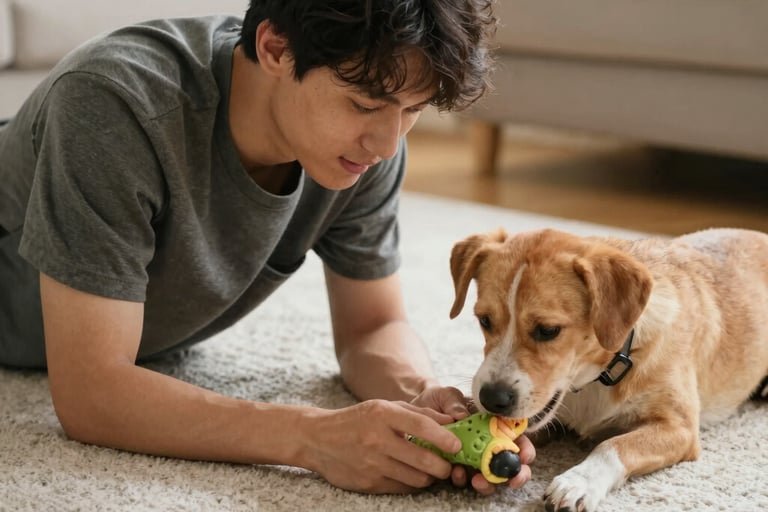

The human-animal bond creates profound physiological changes that directly combat post-acute withdrawal syndrome. Research shows that bonding with animals can lower cortisol levels and promote the release of feel-good hormones, providing an essential counterbalance during early recovery. Furthermore, structured interactions with therapy animals are clinically shown to improve emotion regulation and significantly reduce depressive symptoms.
The Neuroscience of Animal Therapy
How the Bonded Pair Heals the Brain
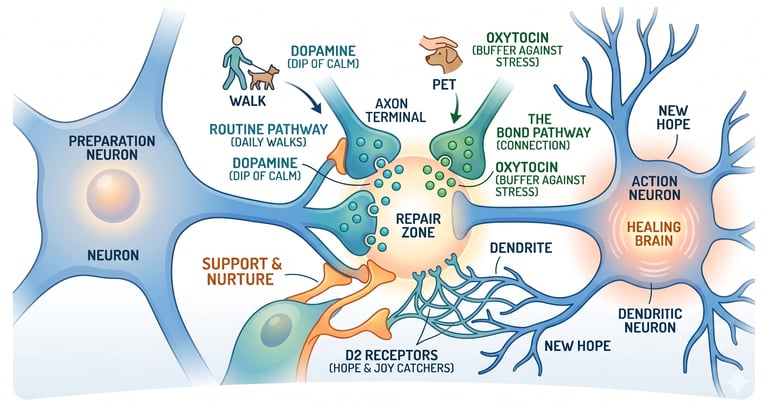
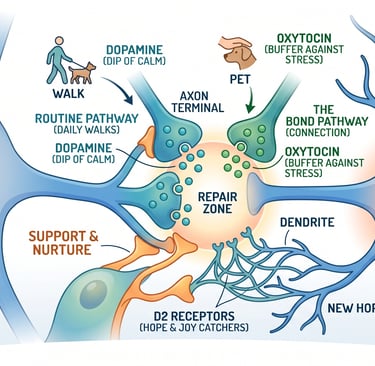
The Routine Pathway: When you commit to the 7:00 AM Biological Reset (the morning walk), you aren't just exercising a dog. You are triggering a steady, natural drip of Dopamine. Unlike the "flood and crash" of substance use, this steady drip provides a sense of calm and mental clarity.
The Bond Pathway: Interacting with your animal companion releases Oxytocin. This powerful hormone acts as a biological buffer, lowering your stress levels and making the "noise" of cravings much quieter and easier to manage.
Rebuilding the "Catchers": Prolonged use can cause the brain to hide its $D_{2}$ Receptors (the parts of your brain that allow you to feel pleasure). Through consistent routine and the emotional bond of animal care, we help your brain re-grow these "Reward Catchers."
The Result: Over time, your brain regains its natural ability to feel joy, hope, and resilience. By healing the animal at the end of your leash, you are physically and biologically healing yourself.


Learn More: The Science of Animal-Assisted Recovery
The Efficacy of Dog-Assisted Therapy in Detained Drug Users
Source: National Institutes of Health (NIH) / PMC This pilot study highlights how canine-assisted therapy significantly improves social skills while reducing cravings, anxiety, and depressive symptoms in individuals struggling with substance dependence.
Animal-Assisted Therapy for Substance Use Disorders
Source: Hazelden Betty Ford Foundation A comprehensive overview of how therapy animals improve the "therapeutic alliance"—the bond between the person in recovery and their treatment plan—resulting in higher treatment completion rates and lower anxiety.
Dog Ownership for People with Substance Use Disorder
Source: International Journal of Mental Health and Addiction This research explores how the responsibility of caring for a dog helps stabilize everyday life, reduces social isolation, and instills a sense of purpose that is vital for long-term sobriety.
It Takes Two: The Interplay Between Dopamine and Oxytocin
Source: Frontiers in Psychiatry / NIH A deep dive into the neurobiology of social interaction, explaining how the release of oxytocin through bonding can help modulate the brain's dopamine pathways, which are often damaged by addiction.
How Animal Companionship Aids in Addiction Recovery
Source: Addiction Center An accessible look at how reputable centers nationwide are utilizing animals to bridge the "trust gap" for those in recovery, helping them open up and build empathy through caregiving tasks.
Write your text here...
info@unconditionalhouse.com
© 2026. All rights reserved.